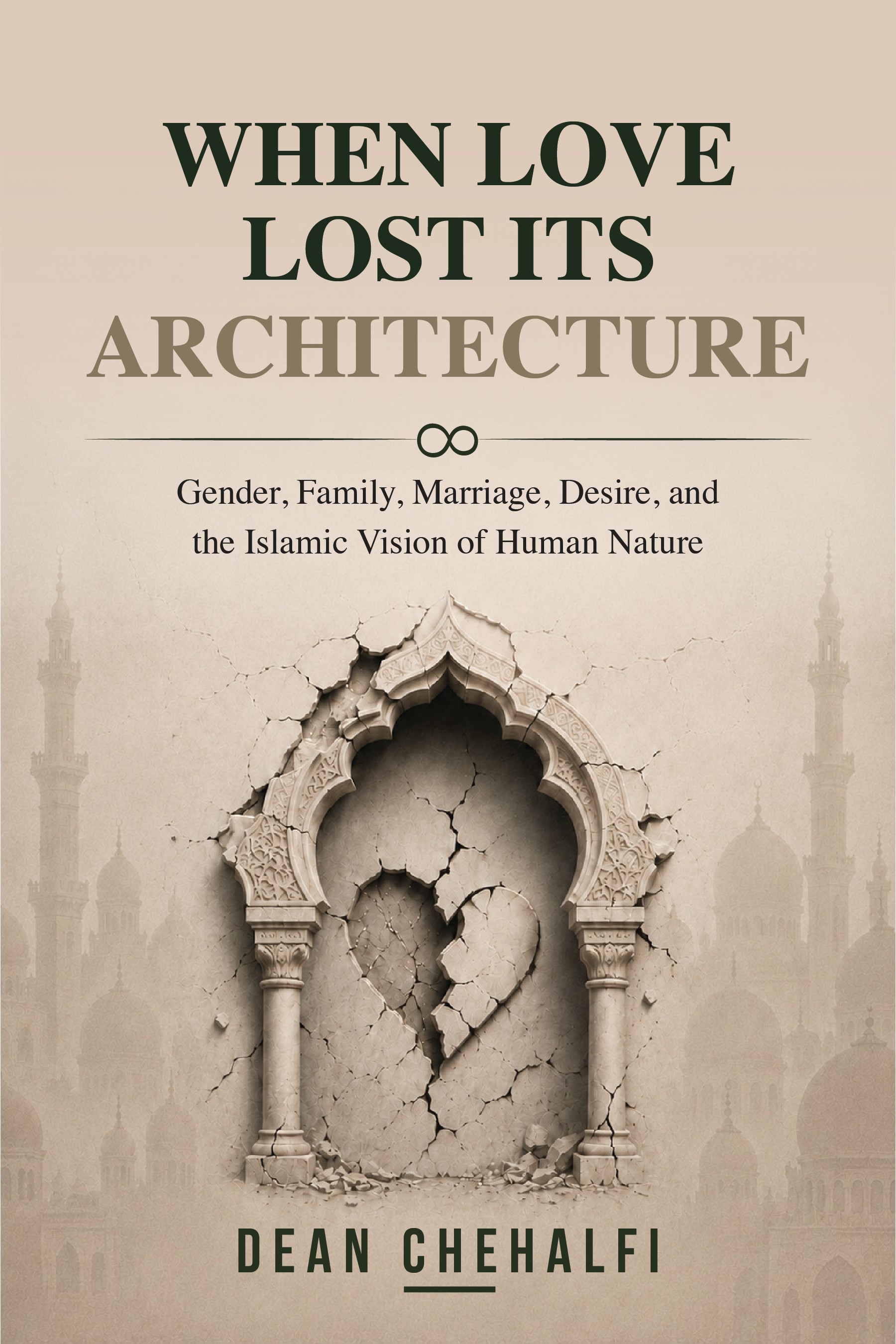
When Love Lost Its Architecture
Gender, Family, Marriage, Desire, and the Islamic Vision of Human Nature
What if modern culture understands desire better than it understands people?
Description
Modern society speaks confidently about love, freedom, identity, and relationships. And yet many people feel more emotionally unstable, more relationally exhausted, and more confused than before. Families fracture more easily. Commitment feels fragile. Loneliness rises in the middle of endless connection.
Which raises a difficult question:
What if modern culture understands desire better than it understands human beings?
Islam speaks directly into that tension. It acknowledges attraction, desire, love, jealousy, temptation, and emotional pain, and then surrounds them with structure, ethics and responsibility intended to protect both the person and the family.
This book addresses the social questions that generate the strongest reactions and the least careful discussion. What does Islam actually teach about marriage, the roles of men and women, polygamy, physical discipline, and homosexuality?
What does paradise really promise, and where does the idea of seventy-two virgins actually come from?
Most people have formed an opinion on these questions before reading a single primary source. This book asks you to look at what the tradition says, where it draws its authority from, and how Muslims who take it seriously actually live.
Some of these chapters will be uncomfortable. That discomfort is worth sitting with. The answers are more careful, more nuanced, and more human than the headlines suggest.
Readers with a Christian background or upbringing who are curious about Islam, but who have never known where to take honest questions without judgement in either direction.
A clear map of the questions themselves – sourced, unhurried, and free of pressure to convert, defend, or conclude anything by the final page.
Inside the Book
Seventeen chapters. The first seven open every book in the series, so that this one stands completely on its own. If you have read another UNTANGLE book, begin at chapter eight.
- Is It Betrayal to Look Beyond?
- Is There an Answer to Everything in Islam?
- How Authenticity Is Investigated
- How Muslims Search for Information About Islam
- Speaking About God's Attributes
- Speaking About God and Facts with Care
- The Unlimited God: Definition and Perspective
- Handshakes, Boundaries, and Warmth: How Muslims Greet the Opposite Sex
- Dating and Premarital Sex: A Clear Islamic Perspective
- Women, Faith, and Fairness
- Women's Hair Covering in the Bible (and Why Muslim Women Care)
- May a Husband Beat His Wife?
- How and Where Women Pray?
- Polygamy and Polyandry
- The Marriage of the Prophet to Aishah
- 72 Virgins in Paradise
- Homosexuality in Islam
There is no shame in asking questions. There is no betrayal in the curiosity to look more carefully at what so many people follow and practise.