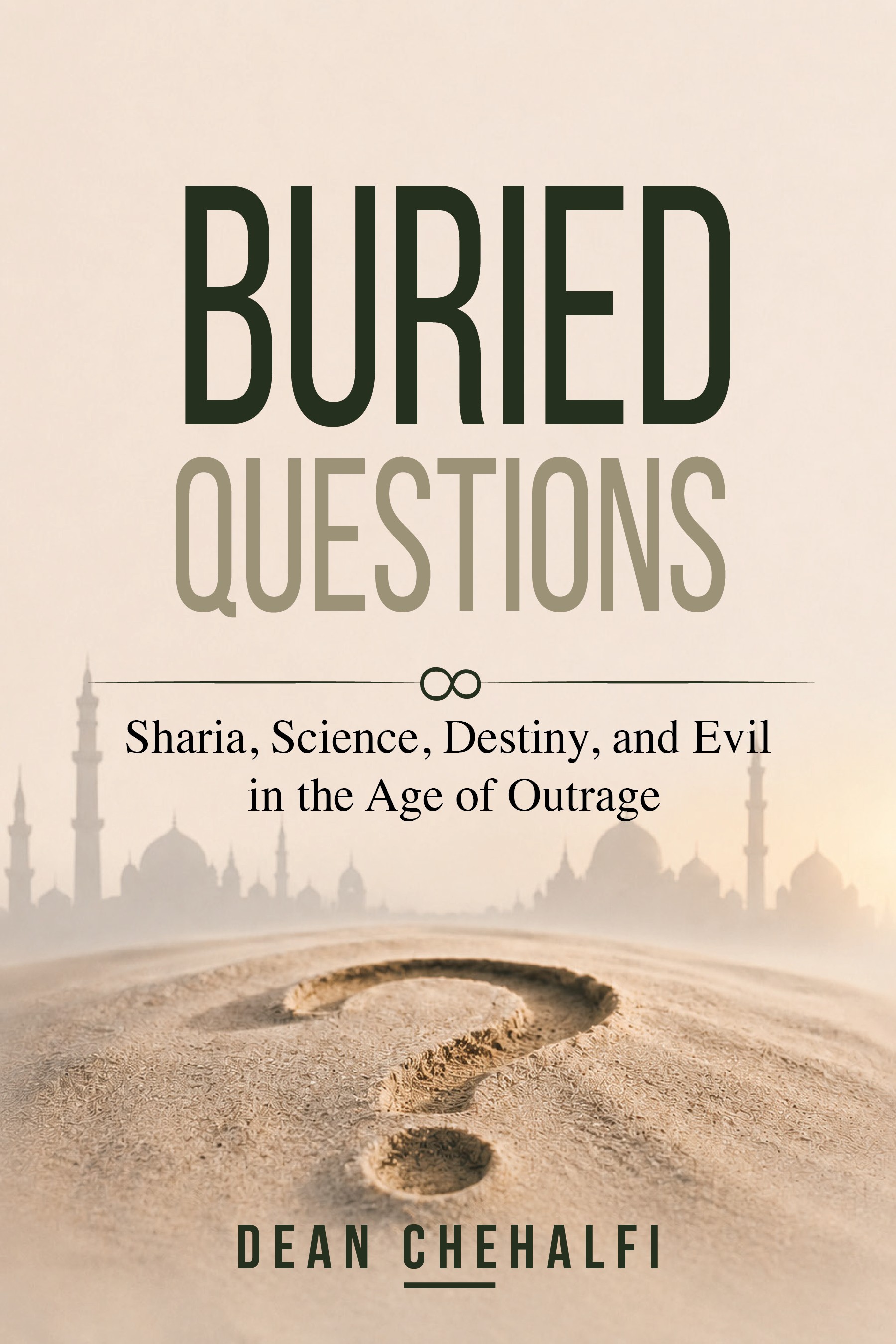
Buried Questions
Sharia, Science, Destiny, and Evil in the Age of Outrage
Why do innocent people suffer and experience evil, if God is good?
Description
Every worldview eventually arrives at the same courtroom: war, disease, betrayal, injustice, loneliness, death.
Beneath careers, success, and the endless scroll, most people quietly carry the same questions. Why do innocent people suffer? Why does evil exist if God is good? What survives death, and why does death feel so unnatural, even when we know it is inevitable?
Few people begin searching for God in moments of comfort. They begin when life fractures their assumptions: at gravesides, after loss, in the nights when distractions stop working and the deeper questions refuse to disappear.
For many culturally Christian readers, Islam can seem distant, until its answers to suffering, accountability, mercy, and death are examined closely.
This book explores life's hardest questions without clichés, emotional manipulation, or hostility toward Christianity or other religions. It investigates what Islam teaches about human responsibility, free will, justice, evil, and the soul's journey after death: clear answers without arrogance, spirituality without fantasy, honesty rather than performance.
Some questions are too important for shallow answers.
Readers with a Christian background or upbringing who are curious about Islam, but who have never known where to take honest questions without judgement in either direction.
A clear map of the questions themselves – sourced, unhurried, and free of pressure to convert, defend, or conclude anything by the final page.
Inside the Book
Twenty-three chapters. The first seven open every book in the series, so that this one stands completely on its own. If you have read another UNTANGLE book, begin at chapter eight.
- Is It Betrayal to Look Beyond?
- Is There an Answer to Everything in Islam?
- How Authenticity Is Investigated
- How Muslims Search for Information About Islam
- Speaking About God's Attributes
- Speaking About God and Facts with Care
- The Unlimited God: Definition and Perspective
- Destiny and Free Will
- Can We Live Without Sinning?
- Admitting Mistakes: Honesty, Mercy, and the Courage to Change
- Why Does God Allow Evil?
- What Sharia Really Means
- Do Muslims Bow to the Black Cube in Mecca?
- Why Do Muslims Fast?
- Why Do We Live?
- Why Do We Die and What Happens after Death?
- Do Non-Muslims Go to Heaven?
- Can Science and Islam Coexist?
- Evolution Theory, Evidence and Facts
- What Do the Bible and Quran Say About Pork?
- Wine and Why?
- Honor Killing
- Jihad: A Brief Introduction
There is no shame in asking questions. There is no betrayal in the curiosity to look more carefully at what so many people follow and practise.